Click to read a very good article: 7 Foods Experts Won't Even Eat
*As far as the grass-fed beef goes... I have asked experts in my industry and they say corn and grass is an acceptable feeding regimen but the beef has to be high quality. Costco, Whole Foods, Bristol Farms, Gelsons are good places to purchase. XOXO -K
Showing posts with label Prevention. Show all posts
Showing posts with label Prevention. Show all posts
Monday, June 24, 2013


Sunday, May 6, 2012
The Definitive
Cleaning Product Favs
I've put cleaning products to the test; on a mission to find good for you stuff that gets down and to the dirty.
 rubber gloves: William Sonoma (they have great colors)
sponge: Casabella Microfiber Sponges
for stone: Better Life Take it For Granite
best all-surface floor cleaner: Mrs. Meyers All-Purpose, if you have wood floors I like the Method wood floor cleaner.
vacuum: Dyson Animal DC
for bowls: Seventh Generation Natural Toilet-bowl Cleaner
for wood: Method Wood For Good Polish
 laundry: Mrs. Meyers Laundry (they have a baby version as well)
dishwasher: Mrs. Meyers Dish Packs
dish soap: J.R. Watkins and Mrs. Meyers.
surface scrubs: Mrs. Meyers Surface Scrub
 smells: Soy candles are the best for you for those of you that want an oh so refreshing scent in the house.
for hands: La Cucina (Sur La Table), Pure and Good (Anthropologie), J.R. Watkins (Target)
daily use for countertops: Mrs. Meyers Countertop Spray (Basil or Geranium). Addicted!
stains: Citrus Magic Natural Spot & Stain Removal
whites, white: Ecover Non-Chlorine Bleach
rinse-aid: Ecover
Where to purchase: Target, Whole Foods or Soap.com
Your cheat sheet of what to steer clear of: BBP, DEHP, anything with "paraben" in its name, alkylphenols, nonoxynol, nonylphenol, octylphenol. Use green, natural or European ecolabel products.
To happy, healthy cleaning.
I've put cleaning products to the test; on a mission to find good for you stuff that gets down and to the dirty.
 rubber gloves: William Sonoma (they have great colors)
sponge: Casabella Microfiber Sponges
for stone: Better Life Take it For Granite
best all-surface floor cleaner: Mrs. Meyers All-Purpose, if you have wood floors I like the Method wood floor cleaner.
vacuum: Dyson Animal DC
for bowls: Seventh Generation Natural Toilet-bowl Cleaner
for wood: Method Wood For Good Polish

dishwasher: Mrs. Meyers Dish Packs
dish soap: J.R. Watkins and Mrs. Meyers.
surface scrubs: Mrs. Meyers Surface Scrub
 smells: Soy candles are the best for you for those of you that want an oh so refreshing scent in the house.
for hands: La Cucina (Sur La Table), Pure and Good (Anthropologie), J.R. Watkins (Target)
daily use for countertops: Mrs. Meyers Countertop Spray (Basil or Geranium). Addicted!
stains: Citrus Magic Natural Spot & Stain Removal
whites, white: Ecover Non-Chlorine Bleach
rinse-aid: Ecover
Where to purchase: Target, Whole Foods or Soap.com
Your cheat sheet of what to steer clear of: BBP, DEHP, anything with "paraben" in its name, alkylphenols, nonoxynol, nonylphenol, octylphenol. Use green, natural or European ecolabel products.
To happy, healthy cleaning.
Wednesday, April 4, 2012
YAC Awareness Week

Today I learned that around 72,000 young adults are diagnosed with cancer each year. That's around one diagnosed every eight minutes. Cancer is the number one disease killer of people under the age of 40.These are stats I didn't know before, and I imagine many of those outside the young adult cancer movement don't know either.
April 2-8, 2012 is the National Young Adult Cancer Awareness Week®. Hooray for us and who knew we had a week dedicated to us?
Those with cancer between 15-40 years old face unique concerns such as fertility, body image, cognitive function, long-term effects, education, insurance and employment. Young adults with cancer deal with distinctly different issues based on developmental life cycles of their age group. Young adult cancers may also have different biological factors that are now being studied so better treatments can be developed. Young adult cancers, in general, are being left behind in clinical trials and research. Much focus goes into cancer for those over 40 and for pediatrics, but us 15-40 are left behind for many different reasons (our likelihood of survival is less than those over 40 so not a ton of long-term research is completed, we don't participate in and lack of clinical trials and not many doctors specialize in our age group). Also something for all of us to consider is they say there is a delay in diagnosis for young adults and children, because symptoms are overlooked by physicians, who may have a low index of suspicion for cancer in kids or young adults. So whether you are a young adult or have kids: listen up! Listen to your body when something is wrong, know the symptoms of the disease and take care of your body. Please help by sharing this information.
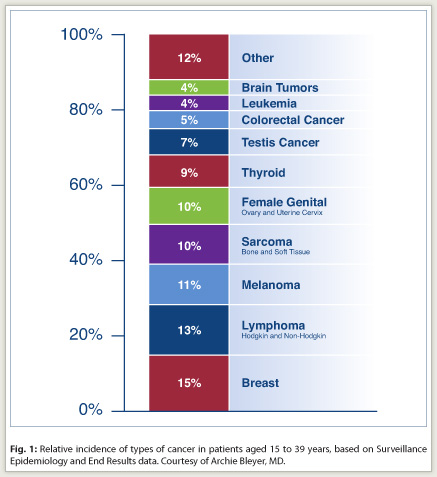
Different Set of Cancers for Young Adults:
Dr. Bleyer identified the types of cancers mostly likely to affect young adults as breast, lymphoma, melanoma, sarcoma, thyroid cancer, and gonadal cancer (testicular for males and cervical carcinoma and ovarian stromal cell tumors for females).
Monday, April 2, 2012
Is Sugar Toxic?
This is a video clip from 60 minutes that aired last night on sugar toxicity. A must watch for everyone and please share the information with others. 60 Minutes Clip
Wednesday, March 14, 2012
So Sweet
As many of you know, I have completely cut out refined sugars in my diet. I only, on rare occasion consume agave nectar. Here is the skinny on sweeteners:
The pink – saccharin: With the information I have read, I think it is the least offensive of the artificial sweeteners.
The blue – aspartame: I have read that aspartame is terrible for you. However, the FDA does not report any safety issues and it is sold and added to over 6,000 products.
The yellow – sucralose: Sucralose is made by taking a sugar molecule and adding chlorine to it. Not good for you, at all!
The green – stevia: Stevia is 100% natural, extracted from a plant in South America, it has a low glycemic index and there are no controversial reports on the health or safety of this natural sweetener.
The real stuff - raw sugar, honey, white sugar: All are accepted by the body as sugar. All cause increases in insulin, our fat storing hormone. Controlling this hormone, so that our food is burned as fuel rather than stored as fat. Much better choices than artificial sweeteners. I think honey is the best of the three.
Agave – 100% natural. It’s the consistency of honey, but is not supposed to spike insulin, like honey. Agave is 20 on the glycemic index as opposed to sugar which is 100!
Before my diagnosis, I didn't know that the GI was.... here is a basic overview, in case you're like me and don't know either: The GI ranks specific carbohydrates from zero to 100, based on how they affect your blood sugar levels after eating them. Typically, eating foods that have a high GI (such as white bread and soda) causes a spike in blood sugar levels. High GI foods have been linked to an increased risk for cancer, type 2 diabetes, acne, Alzheimer's, and weight gain.
Artificial Sweeteners
|
N/A
| Never a Healthy Sugar Alternative All artificial chemical sweeteners are toxic and can indirectly lead to weight gain, the very reason many people consume them. They should be avoided. In fact, given a choice between high fructose corn syrup and artificial sweeteners, we recommend high fructose corn syrup by far (though it's essentially asking if you should consume poison or worse poison). |
Stevia
|
0
| Best Healthy Sugar Alternative Though it is 200-300 times sweeter than table sugar, stevia is not a sugar. Unlike other popular sweeteners, it has a glycemic index rating of less than 1 and therefore does not feed candida (yeast) or cause any of the numerous other problems associated with sugar consumption. Read more about stevia at Organic Lifestyle Magazine (OLM). Please note that Stevia and Truvia are not the same thing. |
Xylitol
|
7
| Xylitol is a natural sugar alcohol sweetener found in the fibers of fruits and vegetables which can cause bloating, diarrhea, and flatulence with initial consumption. It's said to be safe for pregnant women, and is said to possibly treat ear infections, osteoposis, respiratory infections, candida, and is it even helps fight cavities. In fact, in Finland, virtually all chewing gum is sweetened with xylitol. |
Agave Nectar
|
15-30
| A sweet syrup made from the Blue Agave plant, Agave Nectar is obtained by the extraction and purification of "sap" from the agave plant, which is broken down by natural enzymes into the monosaccharides (simple sugars): mainly fructose (70-75%) and dextrose (20-26%). Read more about agave nectar at OLM. |
Fructose
|
17
| Though fructose has a low glycemic index rating, fructose consumption should be limited. Fructose is linked to heart disease as it raises triglycerides and cholesterol. It is devoid of nutrition. |
Brown Rice Syrup
|
85
| It is not recommended for diabetics, since its sweetness comes from maltose, which is known to cause spikes in blood sugar. |
Raw Honey
|
30
| A Healthy Sugar Alternative in moderation With antioxidants, minerals, vitamins, amino acids, enzymes, carbohydrates, and phytonutrients, raw, unprocessed honey is considered a superfood by many alternative health care practitioners and a remedy for many health ailments. Choose your honey wisely. There is nothing beneficial about processed honey. Read more about honey at OLM. |
Coconut Palm Sugar
|
35
| Originally made from the sugary sap of the Palmyra palm , the date palm or sugar date palm (Phoenix sylvestris). It's also made from the sap of coconut palms. With a relatively low glycemic index, Cocnut palm sugar is the new rage among health nuts. It's often called "coconut nectar sugar" or "coconut sugar". |
Apple Juice
|
40
| Fresh apple juice is good for you, though we recommend eating fresh raw whole apples. Concentrated apple juice (sometimes used as a sweetener) is closer to refined sugar than fresh apple juice. |
Barley Malt Syrup
|
42
| Barley malt syrup is considered to be one of the healthiest sweeteners in the natural food industry. Barley malt is made by soaking and sprouting barley to make malt, then combining it with more barley and cooking this mixture until the starch is converted to sugar. The mash is then strained and cooked down to syrup or dried into powder. |
Amasake
|
43
| This is an ancient, Oriental whole grain sweetener made from cultured brown rice. It has a thick, pudding-like consistency. It's not easy to find in the U.S., but it is a great alternative to refined table sugar. |
Sugar Cane Juice
|
43
| Healthy Sugar Alternative in moderation Sugar cane juice has many nutrients and other beneficial properties and is said by some health practitioners to be almost as medicinal as raw honey. |
Organic Sugar
|
47
| Organic sugar comes from sugar cane grown without the use of chemicals or pesticides. It is usually darker than traditional white sugar because it contains some molasses. (It has not been processed to the degree white sugar is processed). |
Maple Syrup
|
54
| Maple syrup is made by boiling sap collected from natural growth maple trees during March & April. It is refined sap and is therefore processed. It has a high glycemic index, and though it is much more nutritious then refined table sugar and high fructose corn syrup, there are better choices. |
Evaporated Cane Juice
|
55
| Evaporated cane juice is often considered unrefined sugar, but juicing is a refining process, and evaporating refines further. Though better than turbinado, cane juice (unevaporated) is a better choice as a sweetener. |
Black Strap Molasses
|
55
| White refined table sugar is sugar cane with all the nutrition taken out. Black strap molasses is all of that nutrition that was taken away. A quality organic (must be organic!) molasses provides iron, calcium, copper, magnesium, phosphorus, potassium and zinc, and is alkalizing to the body. |
Turbinado
|
65
| Turbinado sugar is partially processed sugar, also called raw sugar. Raw Sugar |
Raw sugar
|
65
| Raw sugar is not actually raw sugar. It is processed, though not as refined as common white table sugar. Therefore, given a choice between raw and white, choose raw. There are many different variations of raw sugar with many different names depending on how refined it is. |
Cola (and most other sodas)
|
70
| Though cola has a lower GI ranking then some might expect, there are many other reasons to avoid cola, or any type of soda. There is nothing beneficial to the human body inside a can of soda (not to mention we should avoid drinking out of aluminum cans!). |
Corn Syrup
|
75
| Corn syrup has very little nutrition and should be avoided. |
Refined, Pasteurized Honey
|
75
| The nutrition is gone, and there is often high fructose corn syrup added to processed honey. Refined pasteurized honey is no better than white table sugar. |
Refined Table Sugar
|
80
| Conventionally grown, chemically processed, and striped of all beneficial properties, many health advocates believe that refined sugar is one of the two leading causes (high fructose corn syrup is the other) of nearly every health ailment known to man (or woman or child). Not only does it have a high GI ranking, but it also is extremely acidic to the body causing calcium and other mineral depletion from bones and organs (sugar is alkaline but has a very acidic effect on the body). |
High Fructose Corn Syrup
|
87
| Many health advocates believe that high fructose corn syrup and refined sugar are the two biggest contributors to health ailments in our society. High fructose corn syrup is a combination of sucrose and fructose. |
Glucose (AKA Dextrose)
|
100
| White bread was the benchmark, but for consistency glucose now holds the rating at 100. |
Maltodextrin
|
150
| Foods that have maltodextrin often say "Low Sugar" or "Complex Carbohydrate", but this sweetener should be avoided! |
Wednesday, February 22, 2012
Army of Women
A friend, Liz gave me the breast cancer "bible" written by Susan Love and it has been a life saver (if you have anyone in your life that is diagnosed it is a great gift).... I have been searching around on her website as of late and have stumbled across very important information. Information on breast cancer, menopause and overall women's health. Check out Love's site
“We need to go beyond a cure. We need to stop people from ever getting breast cancer in the first place.”
— DR. SUSAN LOVE
Love has created an innovative research initiative designed to recruit real women of every age, ethnicity and breast cancer risk to participate in a wide array of clinical studies. In effect, the Army of Women gives all women, with or without breast cancer, the opportunity to partner with researchers and take breast cancer awareness beyond a cure to prevention.
Some of the Army of Women’s current research studies include:
• Developing an inexpensive and easy to use band-aid-like test strip that can assess whether a premenopausal woman is at risk to develop breast cancer
• Low-dose anti-estrogens & Omega-3 fatty acids to prevent hormone-independent breast cancer
• Using specially trained dogs and a chemical test on exhaled breath markers for early detection of epithelial ovarian cancer
• How bacteria in the intestines metabolize estrogen & other female hormones
• To see if there are differences in breast cells found in the breast milk of healthy women & those who have cancer
• Whether wake/sleep cycle disruptions in women who work the night shift may increase their breast cancer risk
Please join me and the other 360,000 plus women who’ve already become a member of the Army of Women. Whether it’s your book club, friends, family or the women in your office, forward this blog to all of the women in your life, whether they’ve had breast cancer or not, and urge them to sign up.
XOXO, -K
“We need to go beyond a cure. We need to stop people from ever getting breast cancer in the first place.”
— DR. SUSAN LOVE
Love has created an innovative research initiative designed to recruit real women of every age, ethnicity and breast cancer risk to participate in a wide array of clinical studies. In effect, the Army of Women gives all women, with or without breast cancer, the opportunity to partner with researchers and take breast cancer awareness beyond a cure to prevention.
Some of the Army of Women’s current research studies include:
• Developing an inexpensive and easy to use band-aid-like test strip that can assess whether a premenopausal woman is at risk to develop breast cancer
• Low-dose anti-estrogens & Omega-3 fatty acids to prevent hormone-independent breast cancer
• Using specially trained dogs and a chemical test on exhaled breath markers for early detection of epithelial ovarian cancer
• How bacteria in the intestines metabolize estrogen & other female hormones
• To see if there are differences in breast cells found in the breast milk of healthy women & those who have cancer
• Whether wake/sleep cycle disruptions in women who work the night shift may increase their breast cancer risk
Please join me and the other 360,000 plus women who’ve already become a member of the Army of Women. Whether it’s your book club, friends, family or the women in your office, forward this blog to all of the women in your life, whether they’ve had breast cancer or not, and urge them to sign up.
XOXO, -K
Wednesday, January 11, 2012
Cosmetics 101
Part of my quest for having a healthy body involves the cosmetics and toiletries I use. There are many chemicals that are in common products that we all use that are not good for us. I have spent some time researching and am excited to share with you what I have learned....
When you have estrogen-positive breast cancer, estrogen is your enemy (because it is your cancer's best friend) and so are pseudo-estrogens. A pseudo-estrogen is easily mistaken by the body for a true estrogen and actually turns them into virtual copies of estrogen. Pseudo-estrogens are: soy, lavender, tea tree, dairy and verbena.
Avoid: Phthalates and Parabens. Phthalates to avoid include: BBP and DEHP. Parabens to avoid include methylparabens, polyparaben, isoparaben, butylparaben. If these are in your products, they will be listed on the ingredients list. Most often the parabens are towards the bottoms but not always. Typically when you see that a product is Vegan or Organic they are likely free of both the bad things. But, not always so check. Other things to stay away from are sulfates (commonly found in hair products), mineral oil and petroleum oils.
If you use these products they are not going to give you breast cancer, however, research shows that they may be playing a part in the rise of breast cancer cases. They help create the right environment for a tumor and are not suppose to be good for the overall health of the skin. I have come to appreciate the skin much more, it is one of the largest organs. Everything we put on it, is absorbed into our body. Research has suggested that tumors biopsied have large amounts of parabens. My disclaimer: within my research there are some who say that any products are good products (for example my oncologist) and many that say that natural is important.
Here are some tools I have found and use: Cosmetic Buying Guide and Sunscreen Buying Guide
I stressed out when I was first diagnosed, wondering if I should go through my toiletries and throw everything out that listed a ingredient that wasn't good for me. So that it wouldn't be so overwhelming I have been changing things out one-by-one. Finding something I love and starting to use it has been a fun experience. I will share with you what I have found that I LOVE and I promise to share along my journey. If you have a product that you love, please share. I would love to try it. There are some things that I am not going to give up, but most all I have. For example; La Mer has ingredients that aren't great for me, but I have been using it for years and am choosing to continue to use it.
My Favorite Products:
When you have estrogen-positive breast cancer, estrogen is your enemy (because it is your cancer's best friend) and so are pseudo-estrogens. A pseudo-estrogen is easily mistaken by the body for a true estrogen and actually turns them into virtual copies of estrogen. Pseudo-estrogens are: soy, lavender, tea tree, dairy and verbena.
Avoid: Phthalates and Parabens. Phthalates to avoid include: BBP and DEHP. Parabens to avoid include methylparabens, polyparaben, isoparaben, butylparaben. If these are in your products, they will be listed on the ingredients list. Most often the parabens are towards the bottoms but not always. Typically when you see that a product is Vegan or Organic they are likely free of both the bad things. But, not always so check. Other things to stay away from are sulfates (commonly found in hair products), mineral oil and petroleum oils.
If you use these products they are not going to give you breast cancer, however, research shows that they may be playing a part in the rise of breast cancer cases. They help create the right environment for a tumor and are not suppose to be good for the overall health of the skin. I have come to appreciate the skin much more, it is one of the largest organs. Everything we put on it, is absorbed into our body. Research has suggested that tumors biopsied have large amounts of parabens. My disclaimer: within my research there are some who say that any products are good products (for example my oncologist) and many that say that natural is important.
Here are some tools I have found and use: Cosmetic Buying Guide and Sunscreen Buying Guide
I stressed out when I was first diagnosed, wondering if I should go through my toiletries and throw everything out that listed a ingredient that wasn't good for me. So that it wouldn't be so overwhelming I have been changing things out one-by-one. Finding something I love and starting to use it has been a fun experience. I will share with you what I have found that I LOVE and I promise to share along my journey. If you have a product that you love, please share. I would love to try it. There are some things that I am not going to give up, but most all I have. For example; La Mer has ingredients that aren't great for me, but I have been using it for years and am choosing to continue to use it.
My Favorite Products:
 |
| I use Aveda lip balm and have the Neutrogen Naturals handy. |
 |
| L'Occitane Almond Body Oil. I use this instead of lotion and truly am in love with it. |
 |
| L'Occitane Hand Cream. A staple. |
 |
| Yes to Cucumber Facial Towlettes. You can get these at Target which I love. |
|


Sunday, November 13, 2011
Fight Now
Hope you had a great weekend. Thank you for stopping by to read my blog.
I have been spending many long hours researching how I can assist my doctors in my fight against breast cancer. The best ways to keep my body healthy, nourished and happy. I am in the middle of a few different books that I am reading and can't wait to share with you what I have learned. But for now the link below is to a fantastic book that is printable or you can save it in your iBooks. I found it online the night that I was diagnosed, I read it quickly, took many notes and have since been following all the suggested food and diet notes. The information that is in this book I am also finding in the other anti cancer books I am reading. This is a fantastic resource for every woman, whether you or someone you know has cancer but even better for those that want to prevent breast cancer.
Please read and share it with all of your girlfriends. And after you read it you can help keep me on track in case I am eating the wrong thing next time we are together.
http://www.fightbcnow.com/wp-content/uploads/FightNow-DrTabor-Book-v1.pdf
I have been spending many long hours researching how I can assist my doctors in my fight against breast cancer. The best ways to keep my body healthy, nourished and happy. I am in the middle of a few different books that I am reading and can't wait to share with you what I have learned. But for now the link below is to a fantastic book that is printable or you can save it in your iBooks. I found it online the night that I was diagnosed, I read it quickly, took many notes and have since been following all the suggested food and diet notes. The information that is in this book I am also finding in the other anti cancer books I am reading. This is a fantastic resource for every woman, whether you or someone you know has cancer but even better for those that want to prevent breast cancer.
Please read and share it with all of your girlfriends. And after you read it you can help keep me on track in case I am eating the wrong thing next time we are together.
http://www.fightbcnow.com/wp-content/uploads/FightNow-DrTabor-Book-v1.pdf
Subscribe to:
Posts (Atom)